
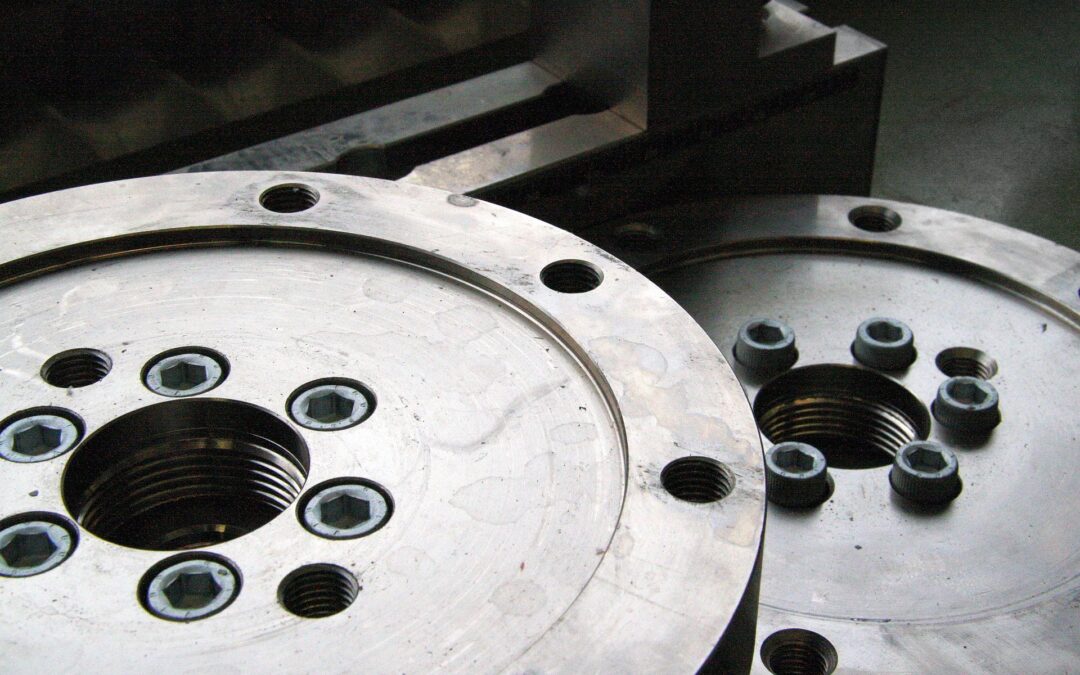
Companies established outside the European Union may incur significant amounts of Spanish VAT when they engage Spanish manufacturers to produce moulds, tooling or other equipment required for the manufacture of specific components.
As a general rule, recovering this VAT may be more complex for a non-EU company due to the reciprocity requirement. However, there is a particularly relevant exception for industrial businesses. VAT & Green Tax assists non-established companies with Spanish VAT refund claims, and this exception may allow companies to recover VAT that they might otherwise consider a definitive cost.
Spanish VAT refunds for non-EU companies.
Article 119 bis of the Spanish VAT Law regulates the refund of Spanish VAT incurred by businesses and professionals established outside the European Union.
As a general rule, access to this refund procedure requires reciprocity between Spain and the country where the applicant is established.
This means that companies established in third countries cannot automatically recover any Spanish VAT they incur.
In addition, the applicant must appoint a representative resident in Spain who will be responsible for the formal and procedural obligations related to the refund claim.
However, the Spanish VAT Law expressly provides for certain exceptions to the reciprocity requirement.
Tooling and moulds: an exception to the reciprocity requirement.
One of the most relevant exceptions applies specifically to toolings, moulds and equipment.
Since 2015, reciprocity is not required for certain Spanish VAT amounts incurred in connection with these goods, provided that the conditions set out in Article 119 bis of the Spanish VAT Law are met.
This opens the possibility of recovering Spanish VAT even for companies established in third countries where the general reciprocity requirement would otherwise restrict the refund.
Which transactions may benefit from this exception?
The rule covers toolings, moulds and equipment acquired or imported in Spain by a non-established business and placed at the disposal of a business established in Spain.
The Spanish manufacturer subsequently uses those assets to manufacture goods for the foreign company.
To apply the exception, the conditions laid down in Article 119 bis must be met. In particular, the manufacturing must relate to goods that are subsequently dispatched or transported outside the European Union to the non-established company.
Therefore, having a Spanish invoice for the acquisition of a mould is not sufficient on its own. The full structure of the transaction must be reviewed.
A common scenario in the automotive and industrial sectors.
Consider a US or Asian manufacturer that engages a Spanish supplier to produce specific components.
To manufacture those components, a dedicated mould worth EUR 300,000 first needs to be developed.
The toolings belongs contractually to the foreign company but remains physically at the Spanish manufacturer’s premises, where it is used exclusively to manufacture that company’s components.
If the Spanish supplier invoices the mould with 21% Spanish VAT, the foreign company may incur EUR 63,000 of Spanish VAT.
The initial assumption may be that this VAT becomes a cost because the company is established outside the European Union.
However, if the transaction meets the conditions of the exception provided for in Article 119 bis, the absence of reciprocity would not, in itself, prevent the company from claiming the VAT refund.
For high-value industrial transactions, correctly identifying this exception can therefore have a significant financial impact.
What documentation should be reviewed?
VAT refund claims involving moulds and tooling require more than simply submitting invoices.
It is advisable to review, among other documents:
- The purchase invoice for the mould or tooling;
- The agreement between the foreign company and the Spanish manufacturer;
- ownership of the mould;
- The place where it is physically located;
- Its use within the manufacturing process;
- The goods manufactured using the asset;
- Transport and export documentation for those goods; and
- The final destination of the mould or equipment once the manufacturing process has ended.
The purpose is to demonstrate that the transaction effectively falls within the exception provided for under Spanish VAT legislation.
How is the Spanish VAT refund claimed?
Companies established outside the European Union must use the specific VAT refund procedure applicable to non-established businesses.
The claim is filed with the Spanish Tax Authorities and, as a general rule, requires the appointment of a representative resident in Spain.
The application is submitted through Form 361, together with the documentation required to demonstrate both the applicant’s status as a business and its entitlement to the VAT refund.
In these cases, it is particularly important to review the transaction before filing the claim. A refund request based solely on an invoice, without sufficient evidence regarding the use of the mould and the subsequent export of the manufactured goods, may result in information requests or even rejection of the claim.
Recovering Spanish VAT incurred by non-EU companies.
The absence of reciprocity does not necessarily mean that all Spanish VAT incurred by a company established outside the European Union is irrecoverable.
Transactions involving moulds, toolings templates and equipment used to manufacture goods that are subsequently exported outside the European Union are one of the exceptions expressly provided for under the Spanish VAT Law.
This is particularly relevant for sectors such as automotive, industrial components, metal, plastics, electronics, machinery and specialised manufacturing, where moulds and tooling can involve substantial investment.
At VAT & Green Tax, we analyse the transactions of non-established companies to determine whether Spanish VAT may be recovered, review the supporting documentation, act as local representative in Spain and manage the VAT refund procedure before the Spanish Tax Authorities.
Before treating Spanish VAT as a definitive cost, it is worth reviewing whether the transaction may fall within one of the exceptions available under Spanish VAT legislation.
